Couldn't load pickup availability
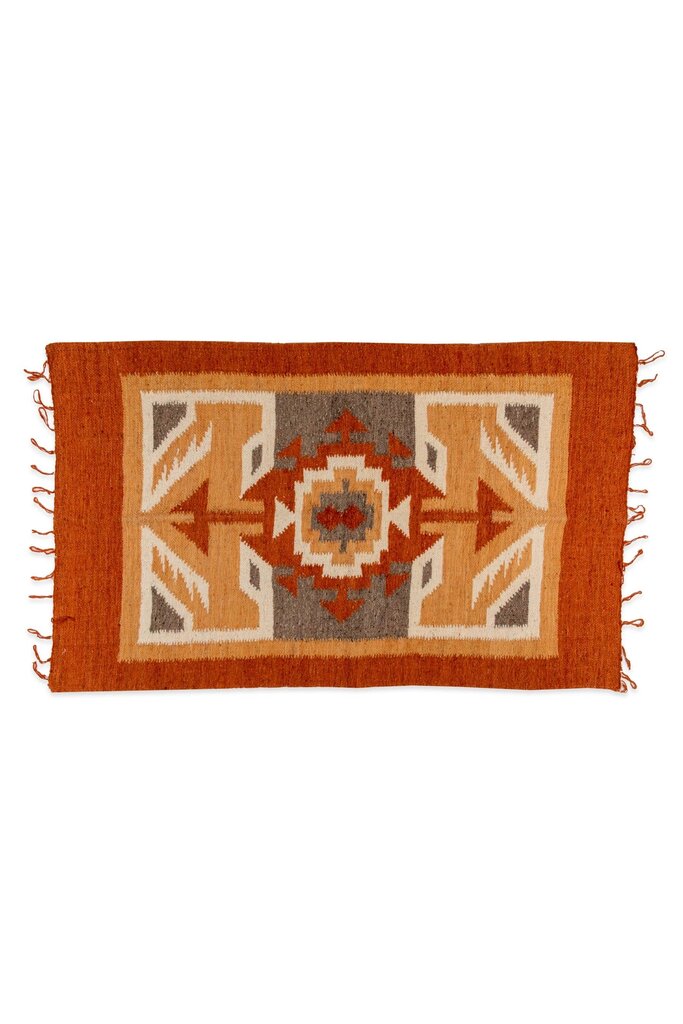
Naranja Rug
An expertly woven work of fiber art made by Señor Melecio de Momostenango, Totonicapán.
Woven in a foot loom from 100% hand-spun, naturally dyed yarn from Guatemalan sheep's wool.
Dimensions:
31"wide x 56"length
Handmade in Guatemala, represented by Chica Mala, Los Angeles.
Materials:
For centuries, sheep have shared their fleeces with communities around the world, helping many families endure harsh weather conditions. These beautiful wool rugs are foot and hand-loomed in an artisan community in the Momostenango region of the Guatemalan highlands.
The natural wool gives it a lush feel. Wool can last 20+ years, making it a gratifying and long-lasting investment. It's naturally resilient fibers can be washed easily in the comfort of your home throughout years of use. When it's finally time to retire your rug, you can rest easy knowing it's 100% biodegradable.
///
Chica Mala is defined by a passion to commit to conscious and impactful consumerism. They collaborate with Guatemalan artisans to incorporate their rich Mayan weaving traditions and designs into beautiful finished home goods and lifestyle products.
Chica Mala directly contributes to the livelihood and sustainability of the indigenous communities whose jobs are at risk to fast fashion and machine-manufactured goods. All products are made by hand using ethically sourced, high quality materials.
Chica Mala represents women who will not accept limitations and will work fiercely to dismantle stereotypes, prejudice and injustices for women around the world. Their artisan partners are business women, leaders, and community organizers from rural communities in Guatemala.
About their founder, ANA GABRIELA LÓPEZ
As a Guatemalan native, Ana Gabriela wants to shine a spotlight on the richness of her culture and the tangible beauty of her home – all while creating a business that makes a social, environmental, and educational impact.
When the Covid-19 global pandemic started Ana Gabriela reconnected with a team of Indigenous artisan women in rural Guatemala she had met in 2018. She remembered them telling her how much their communities rely on tourism for their business to thrive. Their coperativa (co-op) was made up of 35 Indigenous women who were each representing and providing for their families.
Without knowing it, her social entrepreneurship journey began that moment with a genuine will to help. She began virtually collaborating with her co-op partners on innovative ways to expand their marketplace and started sourcing, designing and creating unique artisanal handmade pieces to sell in the US.
Ana saw an opportunity to create high quality products that support the economic development of indigenous communities in Latin America all while creating representation for women of color in business in the US.